A Place Built on Faith
OUR HISTORY
The story of Hortense Wesleyan Camp and the people who have kept its traditions alive.
01 / THE BEGINNING - 1904
Where the Story Began
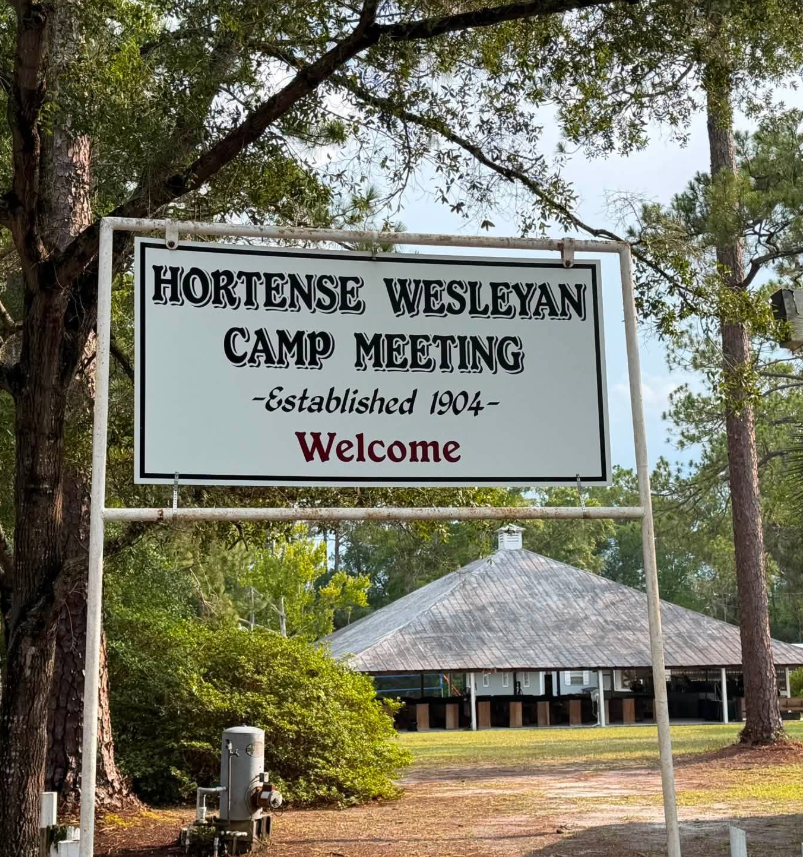
In the early 1900s, Rev. William Marion Lee came to Hortense and held a tent revival. His preaching helped lead many in the area to Christ, and in 1904, he founded the Hortense Wesleyan Methodist Holiness Camp Meeting as an annual gathering for spiritual renewal and revival.
Land for the camp was donated by two Stewart brothers, and lumber was given to build a Tabernacle for preaching services. In 1905, sawmill owner Arnton Lewis was asked to estimate how much lumber would be needed. On his way to his own wedding that May, he stopped to provide the estimate.
By August 1905, the Tabernacle was complete and ready for Camp Meeting.
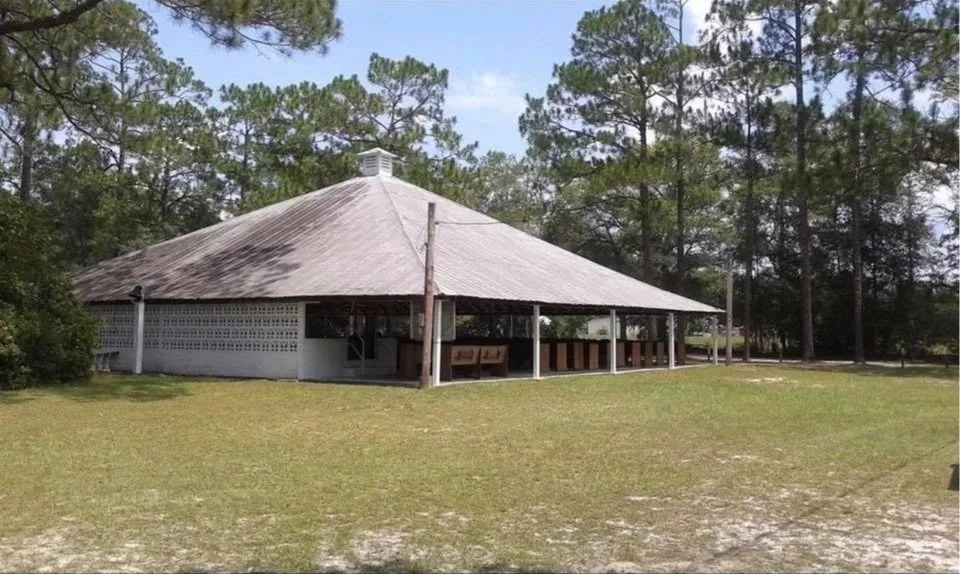
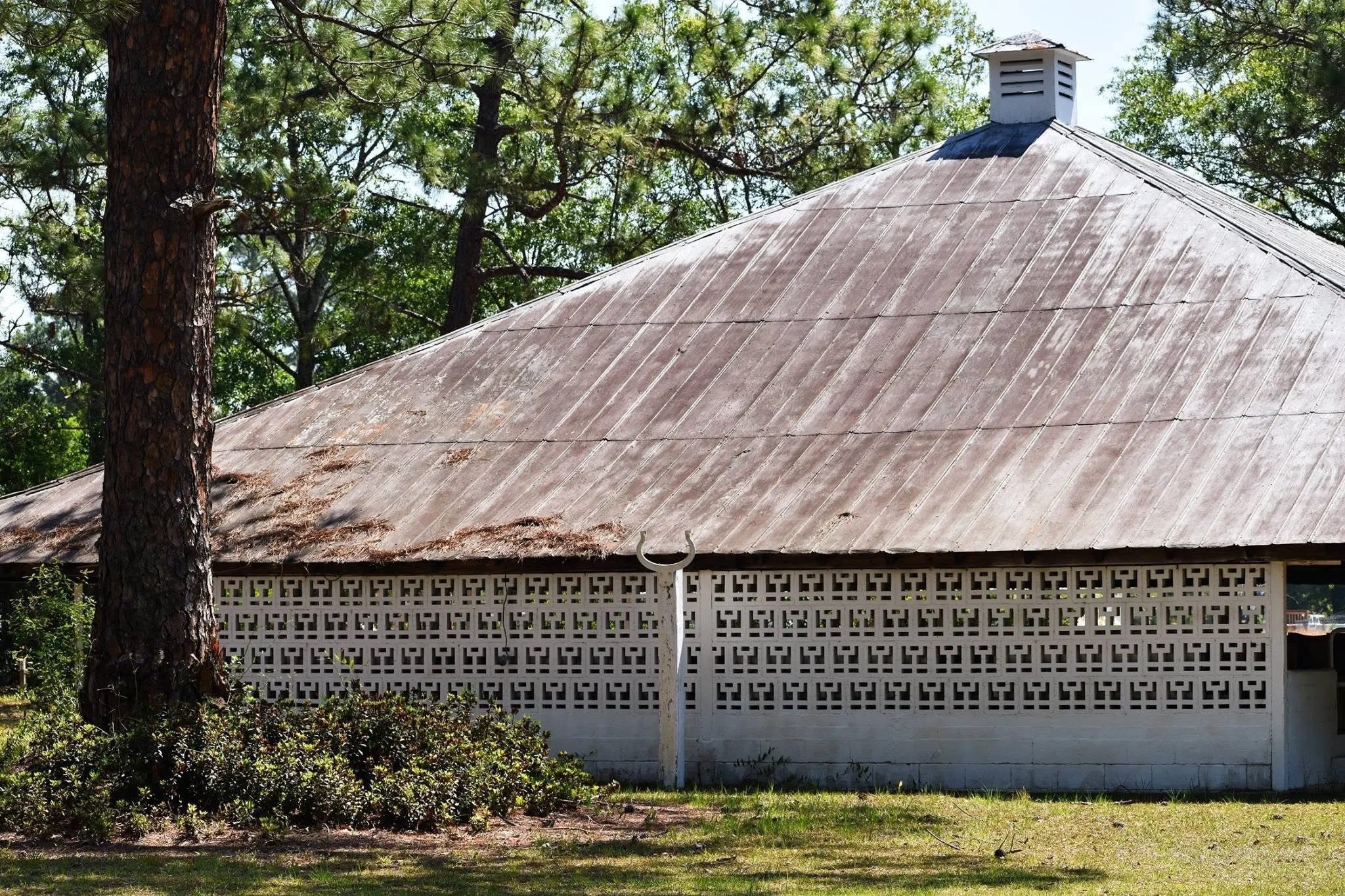
The original Tabernacle was open-air and it remains so today.
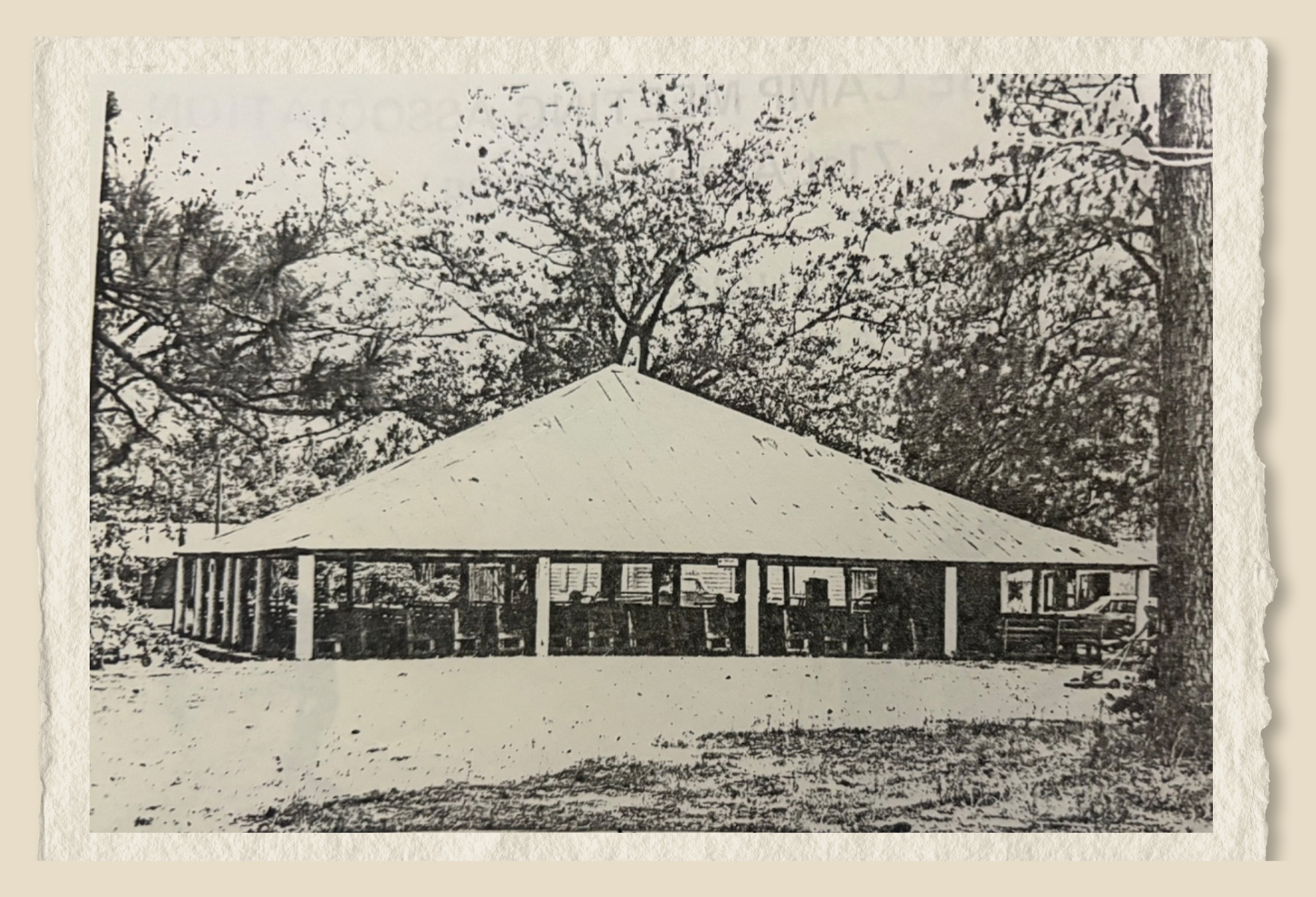
Hortense Camp Meeting — archival material, 1975
¼ Mile South of Highway 32 in Hortense, Georgia
02 / THE TABERNACLE — 1905
Built to Last
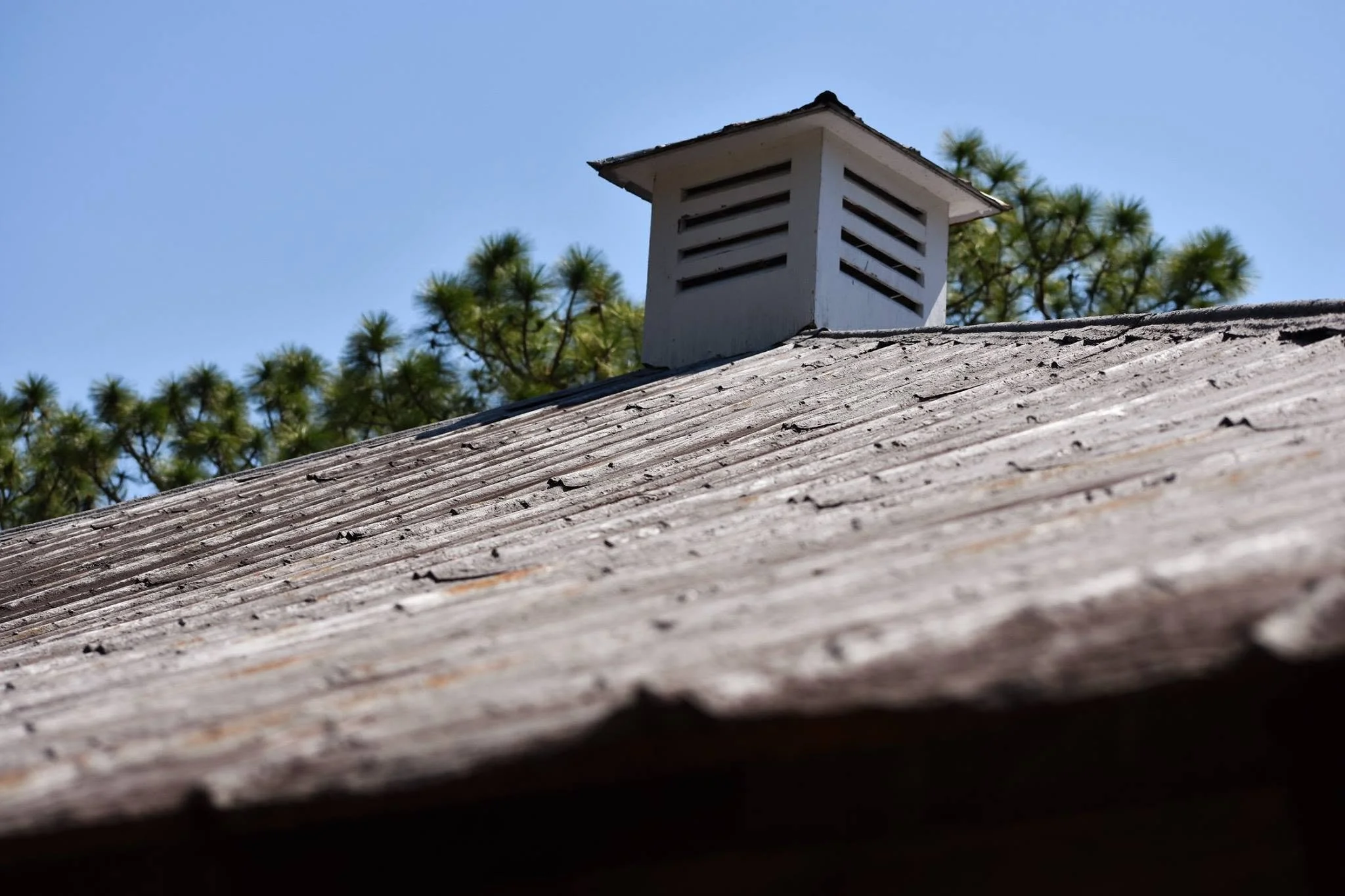
When the Tabernacle was completed in 1905, it looked much different than it does today. The original roof was covered with wood shingles, the floor was dirt, and the posts were hand-hewn from sturdy trees.
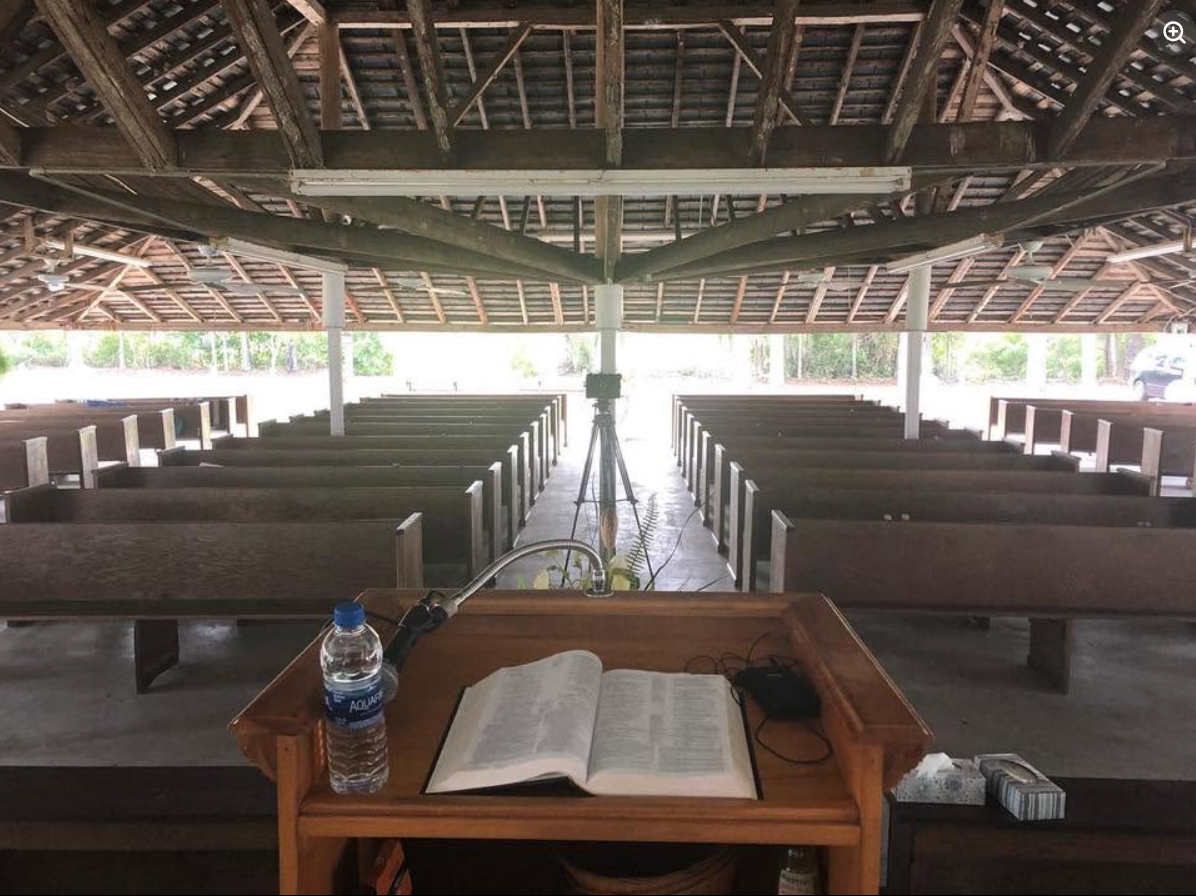
Inside were four rows of handmade wooden benches. The longer benches lined the outside rows, with shorter benches toward the center. No two were exactly alike — each had what was remembered as its own “character.”
The original altar consisted of two bench-style structures secured into the dirt floor, without kneeling pads. Although the Tabernacle has changed through the years, pieces of its earliest construction remain.
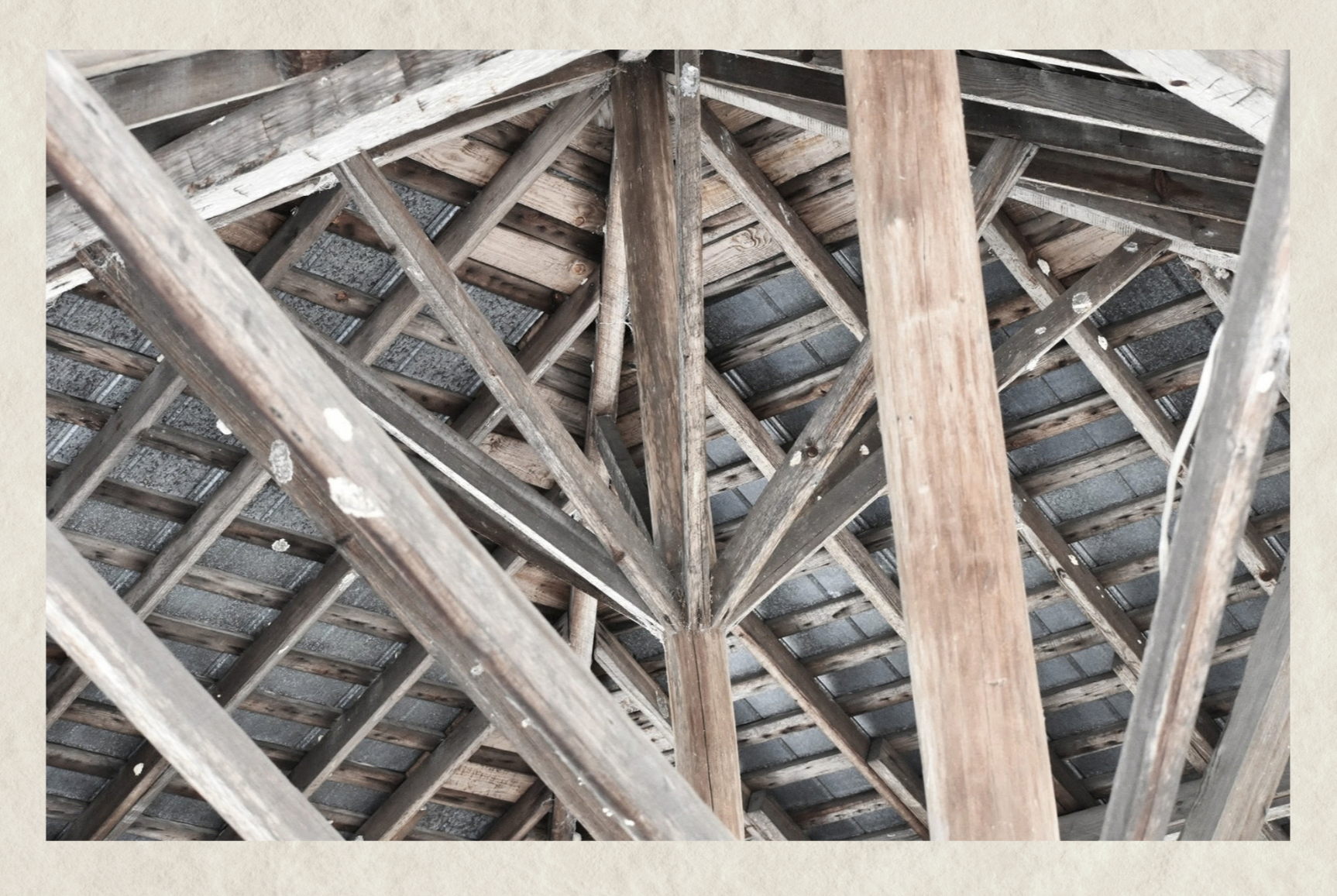
The criss-cross rafters overhead are the original rafters of the Tabernacle.
03 / EARLY CAMP LIFE
A Simpler Way of Life
The earliest Camp Meetings looked very different from the gatherings that would come later. There was no running water, no electricity and no public restrooms. Campers relied on hand pumps, kerosene lamps and outdoor toilets.
Overnight accommodations were simple. The first lodging consisted of a shelter with temporary sides and sturdy wooden shelves where men could sleep using their own pads or mats.
As Camp Meeting grew, permanent cabins, were built for families traveling from out of town. The cabins had wooden floors, push-out windows and peaked roofs. Some were divided into rooms, while others used hanging sheets for privacy.
Families brought food from home, prepared their own meals and ate together in their cabins.
For ten days, camp became a way of life.
04 / KEEPING CAMP GOING
Built by Those Who Believed in It
As word of the annual Camp Meeting spread, people began coming from near and far. Money was often scarce, but support for the camp was not.
Those who could not contribute financially found other ways to help. Families gave what they had, and some made significant sacrifices to ensure Camp Meeting could continue.
One remembered example is B. L. Adams, father of Cecil, Alva, Winnie Strickland and Estelle Middleton, who donated a fat steer to be sold to raise money for the camp.
Those who were able to give financially did so sacrificially and generously. The camp continued because people believed deeply in its purpose and were willing to help sustain it.
The camp was sustained not by abundance, but by people willing to give what they had.
05 / SECURING THE CAMPGROUND
1946–1949
A Place to Call Its Own
1946
In August 1946, Benjamin Grooms Middleton of the Atkinson community donated a narrow strip of land that allowed the camp property to extend to the street in front of the Tabernacle.
The donated land stretched from the northern corner of the camp property to an area behind what is now known as the Spaulding Building and included the sulphur pump.
THE PROPERTY EXPANDS
1949
In the late 1940s, questions arose concerning the deed to the campground. To prevent future misunderstandings, Addie Scott Lewis, wife of the late Arnton Lewis, paid $400 to J. W. Stewart of Waycross to purchase the land and secure a clear title to the property. The transaction was completed on October 15, 1949.
THE TITLE IS SECURED
06 / THROUGH THE YEARS
The Camp Grew.
The Purpose Remained.
Over the years, Hortense Wesleyan Camp has seen many changes and improvements. The earliest campers arrived to dirt floors, hand pumps, kerosene lamps and simple cabins. As the years passed, the campground developed to better serve the people who gathered here.
Buildings changed. Accommodations improved. New needs were met. But at the heart of Camp Meeting remained the same purpose that brought people to Hortense in the beginning — a time set apart for worship, fellowship and spiritual renewal.
The camp’s history lives not only in its buildings, but in the people who have continued to gather, serve and care for this place year after year.
Much has changed. What Camp Meeting was built for has not.
07 / A LEGACY TO CARRY FORWARD
More Than a Place.
More than a century after the first Camp Meeting, the story of Hortense Wesleyan Camp continues. The campground has changed since those early gatherings, but the faith and purpose behind it remain. Each generation has inherited something built, cared for and preserved by those who came before them.
Today, families still gather. Worship still fills the Tabernacle. Old friendships are renewed, new memories are made, and another generation becomes part of the story. The responsibility now belongs to those who love this place today — to honor its history, protect what has been entrusted to them and carry the spirit of Camp Meeting forward.
A rich heritage, a living faith, and a story still being written.
08 / KEEP EXPLORING
There’s More to the Story
The history of Hortense is found not only in dates, but in the people, places and small moments that kept Camp Meeting going from one generation to the next. Some of those stories have been passed down for more than a century.
When plans were made for a permanent camp meeting site, lumber was donated to build the Tabernacle. In May 1905, sawmill owner Arnton Lewis was stopped on his way to his own wedding to help estimate how much lumber would be needed. The Tabernacle was completed in time for Camp Meeting that August.
01 / BUILT FOR CAMP MEETING
Early campers arrived to a very different Hortense. There was no running water or electricity. Families stayed in simple cabins, prepared their own meals and gathered beneath the open-air Tabernacle on handmade wooden benches.
02 / THE EARLY CAMP EXPERIENCE
Money was scarce, but people contributed in whatever ways they could. Land, lumber, labor and other resources were given to support Camp Meeting. One early supporter even donated a steer to be sold to raise money for the camp.
03 / A COMMUNITY THAT KEPT IT GOING
More than a century of memories.
09 / FROM THE ARCHIVES
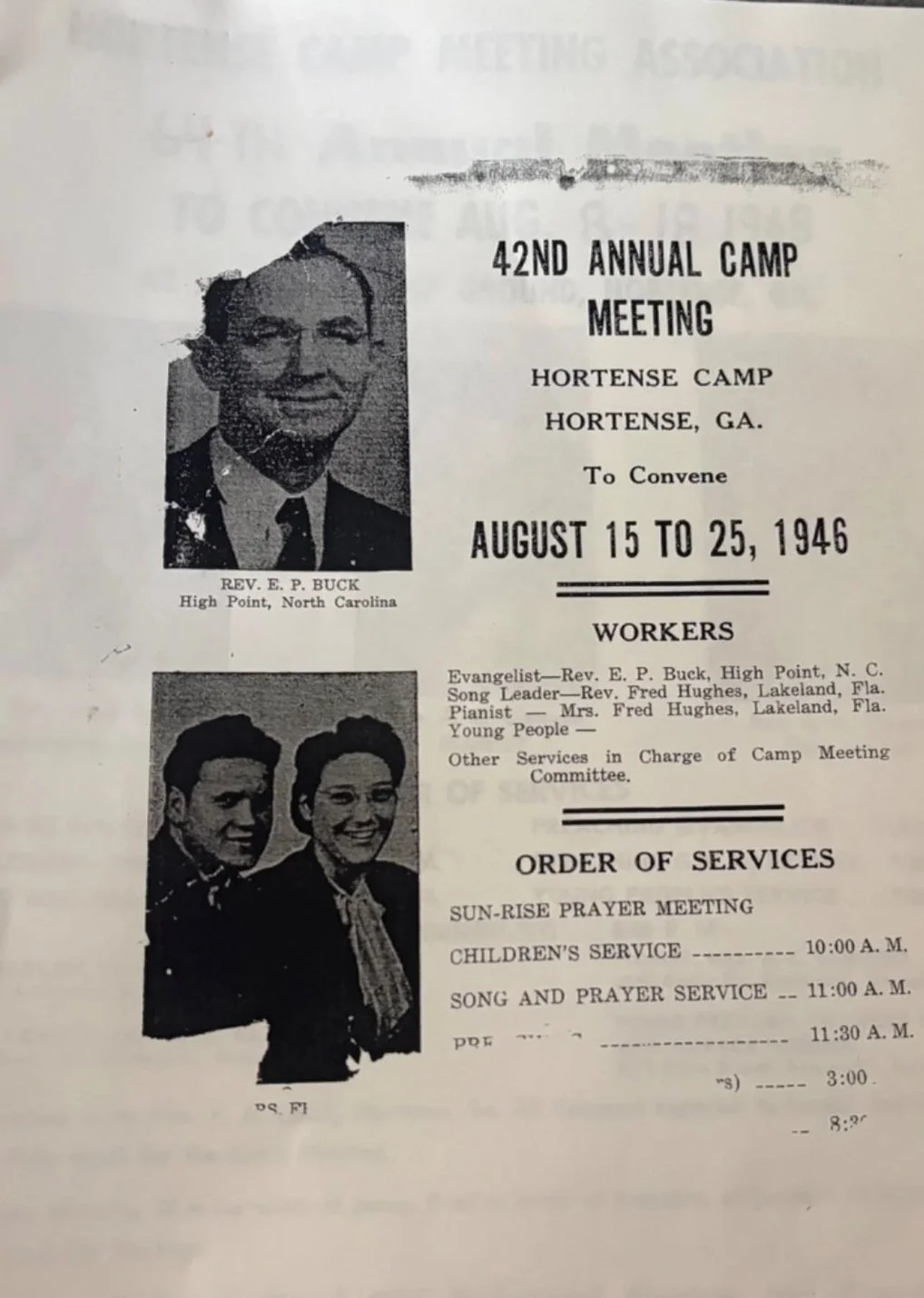
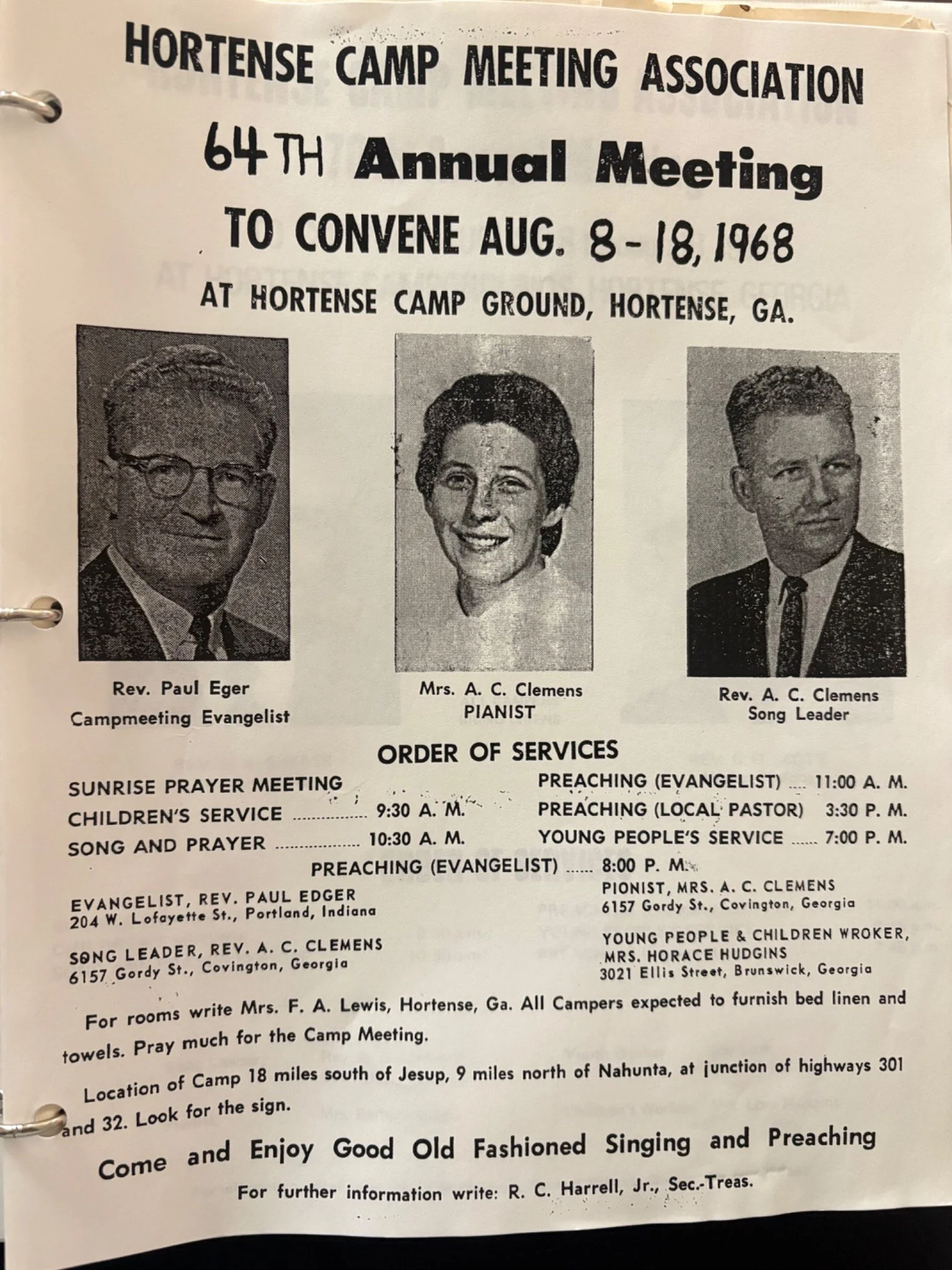
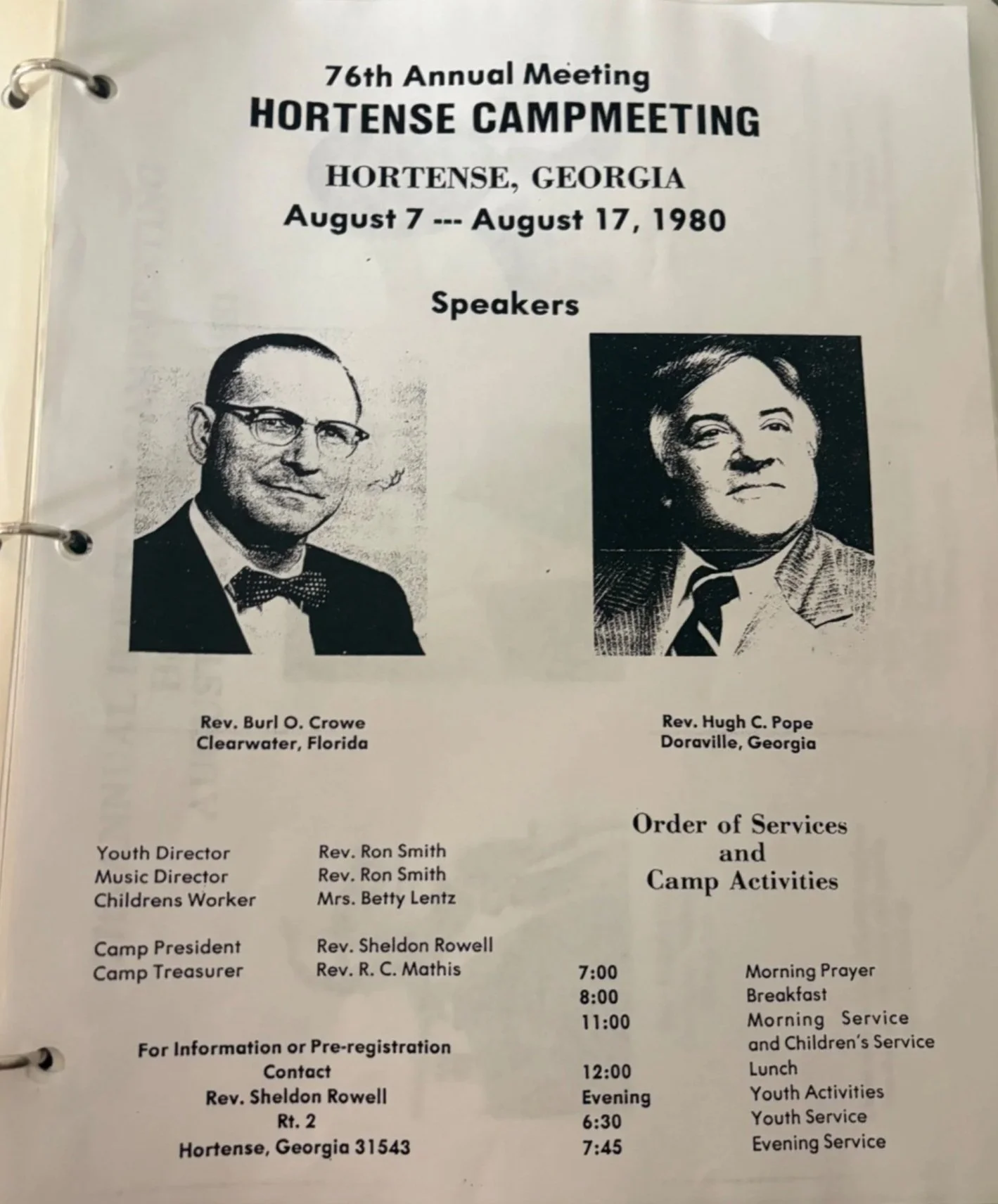
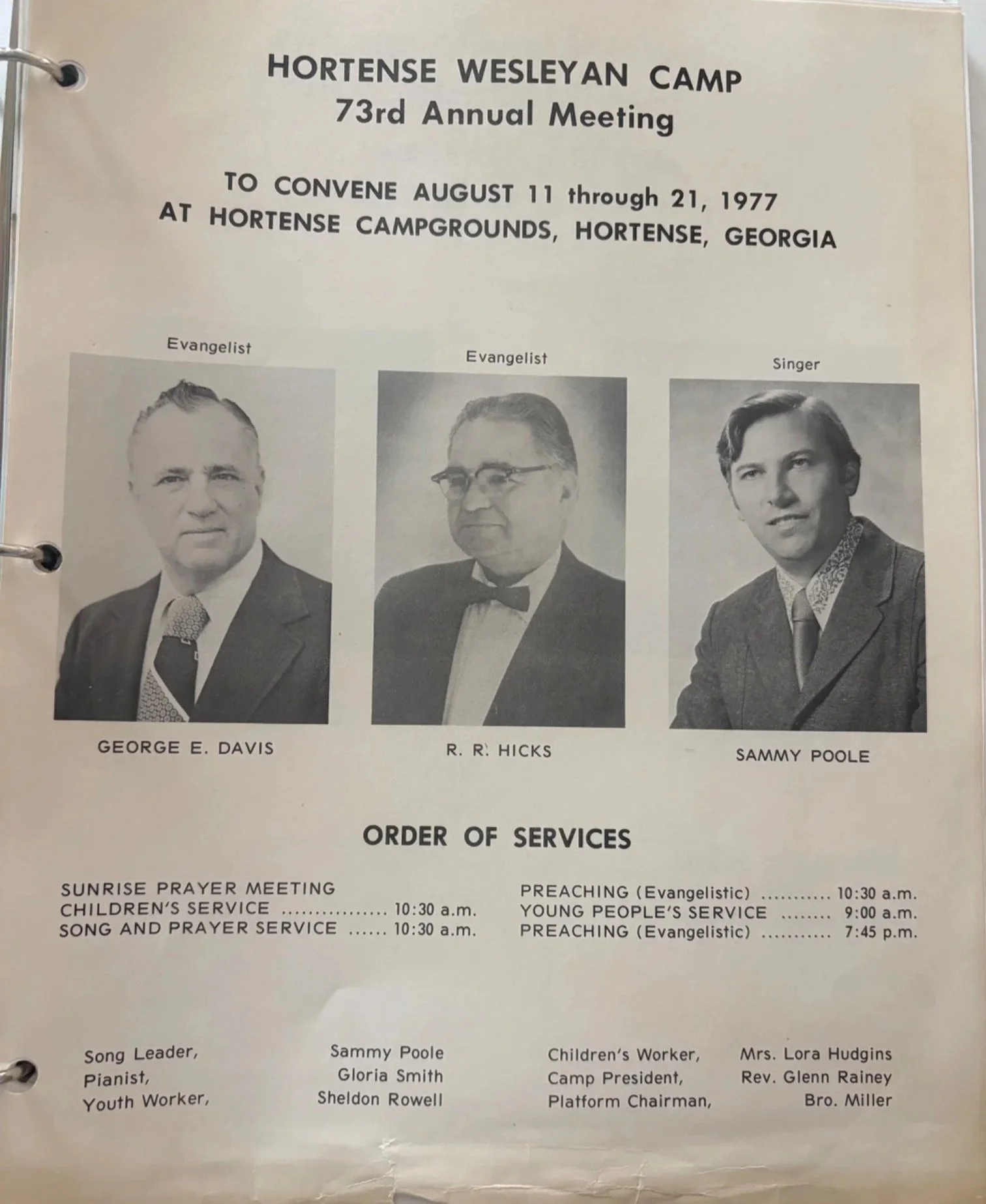
Old photographs, Camp Meeting programs, testimonies and keepsakes preserve pieces of the Hortense story that might otherwise be forgotten. Explore the people and moments that have shaped Camp Meeting through the years.
09 / THE STORY CONTINUES
The story is still being written.
For more than a century, generations have gathered at Hortense for worship, fellowship and tradition. The buildings have changed, the years have passed and new faces have joined the gathering — but the purpose that brought people to Hortense continues.